

*Cube-Host– full cloud services!!
: Function WP_Styles::add was called incorrectly. The style with the handle "hello-elementor-child-style" was enqueued with dependencies that are not registered: hello-elementor-theme-style. Please see Debugging in WordPress for more information. (This message was added in version 6.9.1.) in /home/csrkub/domains/cube-vps.com/public_html/wp-includes/functions.php on line 6131
Notice: Function WP_Scripts::add was called incorrectly. The script with the handle "gpress-custom-js" was enqueued with dependencies that are not registered: gpress-siema. Please see Debugging in WordPress for more information. (This message was added in version 6.9.1.) in /home/csrkub/domains/cube-vps.com/public_html/wp-includes/functions.php on line 6131
*Cube-Host– full cloud services!!


This step is performed before rewriting the disk and installing MikroTik CHR. After writing the RAW image, the current Ubuntu will be completely removed, SSH access will disappear, and you will only be able to configure the network in CHR manually via the emergency console, using the previously saved settings. Therefore, before continuing, be sure to record the network settings provided by the provider.
Example: 203.0.113.10/24
This value will be used when adding an IP address to CHR.
Example: 203.0.113.1
This address will be needed to configure the default route.
If the IP is issued with a /32 mask (often found with VPS providers), this will require special configuration on the CHR side.
Example of a network with /32:
For such networks, the gateway is specified manually when adding an IP address.
This will be useful when initially configuring CHR via the console after rebooting.
Where <VER> is the stable version. If the latest version does not load, use 6.49.10, then update via CHR.
Caution: ensure the device is correct, as writing will be destructive.
This reduces the risk of a “broken” image when using dd (there have been cases of xz-compressed data is corrupt).
Wait until it finishes without errors. This will completely overwrite your current Ubuntu.
SSH will disconnect. The VPS will boot under CHR in its default state — there is no network yet.
In the RouterOS console (menu-oriented CLI):
RouterOS will calculate the network/broadcast based on the prefix; the address can also be added to a single line:
If the provider issues a public IP with a /32 mask and an “external” gateway (for example, 10.0.0.1), set the network manually:
Then the default route:
This is a standard working recipe for /32, confirmed by practice.
Short form:
After setting the address and gateway, CHR will be accessible over the network.
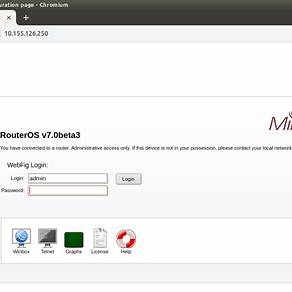
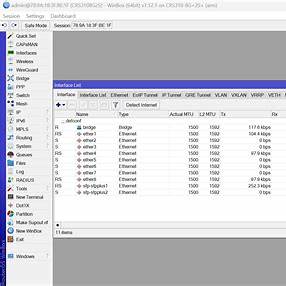
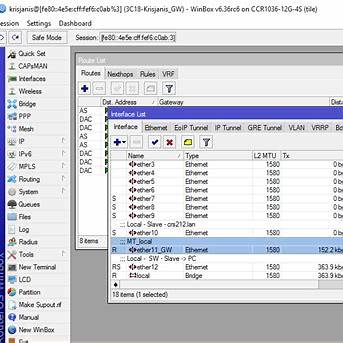
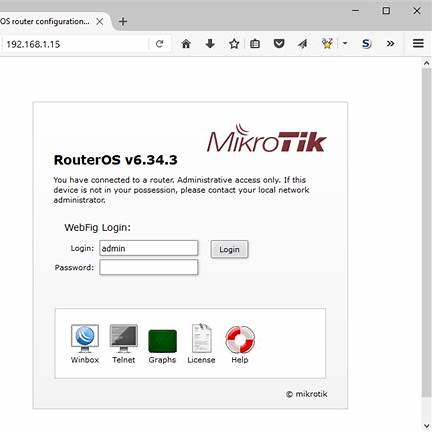
WebFig and Winbox are similar managers in terms of capabilities; by default, WebFig uses HTTP on port 80 (it is better to enable HTTPS), while Winbox uses TCP 8291.
Enable HTTPS for WebFig:
(or leave admin, but set a complex password and restrict access by address)
Check and update RouterOS:
Check CHR license:
(For production loads, select p1/p10/p-unlimited — see the official CHR section)
(For server environments, a static address is preferable.)

